
Details
DRM: Readium LCP DRM
Weitere Details
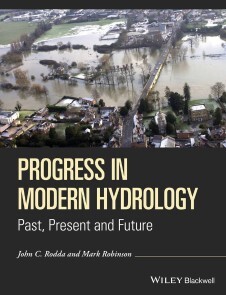
Progress in Modern Hydrology
eBook - Past, Present and Future
Beschreibung
The development of basic understanding through the collection of data with specialised instrumentation in experimental basins
The study of extreme flows both floods and droughts
The role moisture in the soil
Studies of the processes controlling evaporation
Water resource studies
Modelling and prediction of the extremes of flow improved
Understanding of water quality issues
A widening recognition of the importance of an ecosystem approach
Meeting the challenges of climate change,
Data handling
Future developments in hydrology and the pressures which generate them.
Readership: hydrologists in both academia and a wide range of applied fields such as civil engineering, meteorology, geography and physics, as well as advanced students in earth science, environmental science and physical geography programmes worldwide.
Über John C Rodda, Mark Robinson
John Rodda has a life time of experience as a hydrologist with UK governmental and international bodies, particularly the World Meteorological Organization, Geneva, where he was Director of the Hydrology& Water Resources Department. He has authored some 100 scientific papers and 8 books on a wide range of topics. He has held the office of President of the International Association of Hydrological Sciences and several other prominent positions in the international world of water.
Mark Robinson has a lengthy career as a hydrologist, working at the Centre for Ecology and Hydrology, Institute of Hydrology and at several UK universities. His work has encompassed land use change studies including agricultural drainage and forest hydrology, and for over a decade he was responsible for some of the UKs longest running catchment studies. He has published extensively and is co-author of two highly regarded hydrological textbooks.
Inhalt
List of Contributors ix
Chapter Reviewers xiii
Foreword xv
Preface xvii
Acknowledgements xix
Acronyms xxi
1 INTRODUCTION 1
John C. Rodda, Mark Robinson, Jim McCulloch, Christine McCulloch, Alan Jenkins, Terry Marsh, Celia Kirby, Ian Littlewood, Max Beran and Graham Leeks
2 BASIN STUDIES AND INSTRUMENTATION 23
Ian Strangeways, Mark Robinson, Jim Hudson, John C. Rodda, Malcolm Newson and David J. Cooper
3 RISKS AND EXTREMES 60
Lisa Stewart, Max Beran, Frank Farquharson, Duncan Faulkner, David Jones, Thomas Kjeldsen, Malcolm Newson, Enda OConnell and John Sutcliffe
4 TERRESTRIAL HYDROLOGICAL PROCESSES 100
David J. Cooper, John Bell, Martin Hodnett, Keith Beven, Kevin Gilman, Atul Haria, Cate Gardner, Mark Robinson, Jon Evans and Helen Ward
5 THE PHYSICS OF ATMOSPHERIC INTERACTION 135
Colin Lloyd and Sylvia Oliver
6 WATER RESOURCES SECURITY 183
Frank Farquharson, Max Beran, John Bromley, Alan Gustard, Helen Houghton-Carr, Gwyn Rees, John Sutcliffe and Andy Young
7 HYDROLOGICAL MODELLING 216
Keith Beven, James Bathurst, Enda OConnell, Ian Littlewood, Jim Blackie and Mark Robinson
8 WATER QUALITY 240
Richard Williams, Colin Neal, Helen Jarvie, Andrew Johnson, Paul Whitehead, Mike Bowes and Alan Jenkins
9 ECOHYDROLOGY 267
Mike C. Acreman, James R. Blake, Laurence R. Carvalho, Mike J. Dunbar, Iain D. M. Gunn, Alan Gustard, Ian D. Jones, Cedric Laizé, Stephen C. Maberly, Eleanor B. Mackay, Linda May, J. Owen Mountford, Bryan M. Spears, Charlie J. Stratford, Stephen J. Thackeray and Ian J. Winfield
10 CLIMATE CHANGE AND HYDROLOGY 302
Richard Harding, Nigel Arnell, Nick Reynard, Christel Prudhomme, Eleanor Blyth and Chris Taylor
11 HYDROLOGICAL DATA ACQUISITION AND EXPLOITATION 324
Terry Marsh, Roger Moore, Harry Dixon, Jamie Hannaford, Alan Gustard, Andy Young, Melinda Lewis, Colin Neal and Gwyn Rees
12 LOOKING TOWARDS THE FUTURE 366
John C. Rodda, Mark Robinson, Alan Jenkins, Keith Beven, Max Beran and Graham Leeks
Index 379
E-Book Informationen
Bei E-Books die mit Readium LCP geschützt sind erscheint bei dem ersten Öffnen auf Ihrem Reader ein Hinweisfenster mit der Aufforderung ein Passwort einzugeben. Gleichzeitig öffnet sich ein Infofeld in dem das Passwort steht. Tragen Sie dieses Passwort in das Eingabefeld ein und bestätigen Sie die Eingabe. Danach öffnet sich das E-Book automatisch. Um E-Books die mit Readium LCP geschützt sind auf einem Tablet/Laptop/Smartphone lesen zu können, benötigen Sie ein Programm, das in der Lage ist, mit diesem Kopierschutz umzugehen. Das ist z.B. der Thorium Reader (Windows, Mac, Linux) oder die PocketBook App (iOS, Android). Fügen Sie das heruntergeladene E-Book in das Programm ein. Bei dem ersten Öffnen erscheint ein Hinweisfenster mit der Aufforderung ein Passwort einzugeben. Gleichzeitig öffnet sich ein Infofeld in dem das Passwort steht. Tragen Sie dieses Passwort in das Eingabefeld ein und bestätigen Sie die Eingabe. Danach öffnet sich das E-Book automatisch.
Hiermit erhalten Sie den Download-Code zu Ihrem neuen ebook.
Viel Vergnügen bei der Lektüre und freundliche Grüße,
Franzis Hensch